
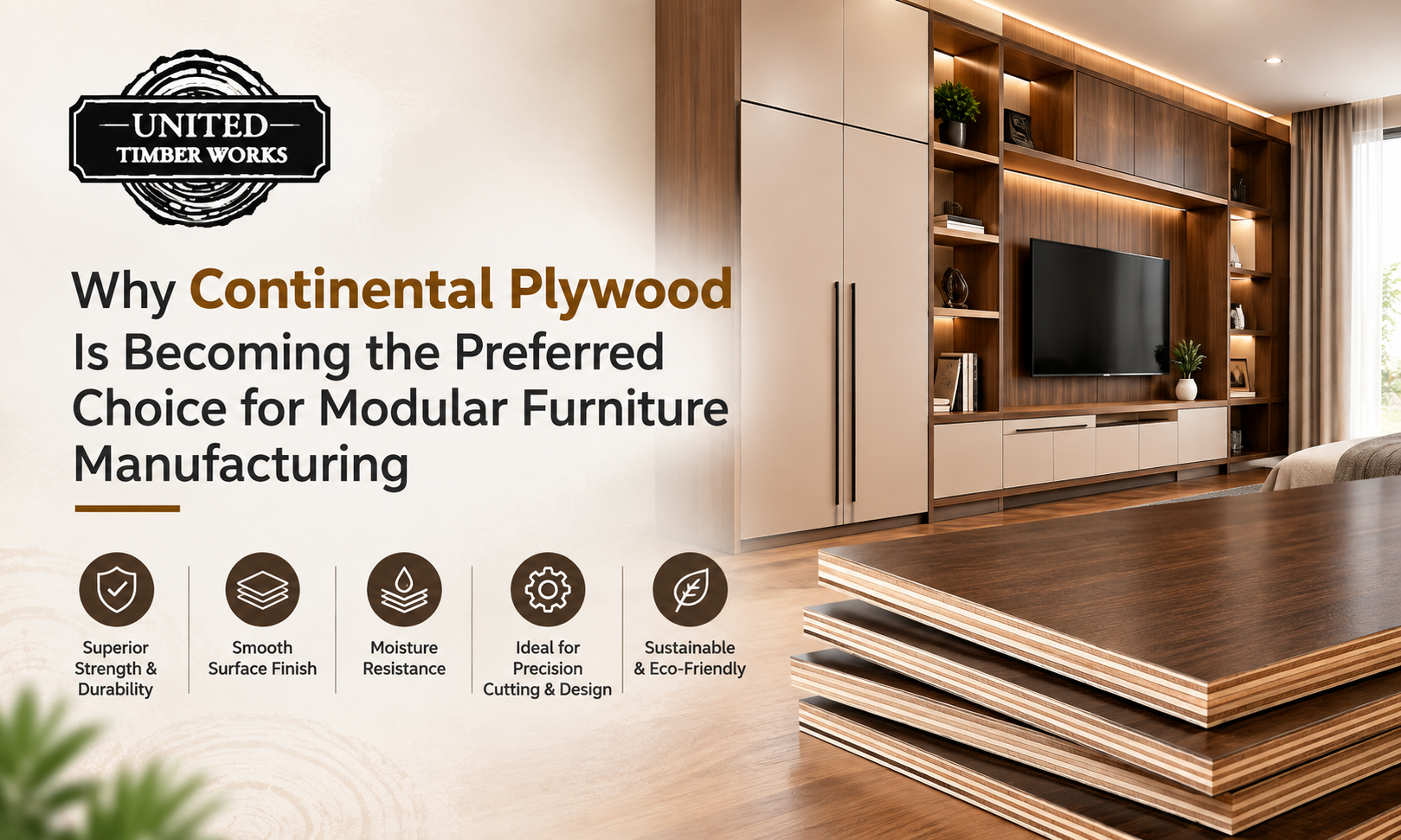
Continental plywood has quickly become one of the most sought-after materials in modular furniture manufacturing, and for good reason. Walk into any modular furniture unit today, and you will notice a quiet shift happening on the shop floor. Manufacturers are becoming far more selective about the plywood they bring in. At United Timber Works, we have watched the preference for continental plywood grow steadily, and it is not a passing trend. It comes down to how this plywood performs once it leaves the warehouse and enters real production lines, where consistency, finish, and durability decide whether a piece of furniture holds up for years or falls apart within months.
This shift matters because modular furniture is no longer a niche segment. It has become the backbone of how Indian homes, offices, and commercial spaces get furnished, and the plywood behind every module carries the weight of that expectation.
What Sets Continental Plywood Apart
Cut open a sheet of continental ply, and you will see why manufacturers trust it so much. Instead of a couple of thick veneers stacked together, it is built from several thinner layers, each one placed with its grain running against the last and pressed together under carefully controlled heat and pressure. That cross-layering is not just a manufacturing detail. It is the reason this plywood behaves so differently once it lands on a furniture production line.
Core Characteristics That Matter to Manufacturers
- Dimensional stability: Because the grain alternates direction from layer to layer, the sheet resists the natural pull that causes plywood to warp or bow. Once it is cut into panels for wardrobes or cabinets, it tends to hold its shape rather than fight against it.
- Strong screw and joint holding: Modular furniture lives and dies by its fittings. Hinges, connectors, and screws need something solid to bite into, and a plywood core that is weak or inconsistent loosens up faster than most people expect. A properly built continental plywood core gives those joints something to actually hold onto, year after year.
- Smooth, uniform surface: Nobody wants to spend extra hours sanding down an uneven sheet before lamination or veneering can even begin. A consistent surface means the finishing process moves faster, and the end result looks the way it is supposed to, without patchwork touch-ups.
- Better machinability: Ask anyone running a CNC line, and they will tell you that inconsistent density is their biggest enemy. Cutting, routing, and edge banding all go smoother when the plywood behaves predictably from one sheet to the next, instead of surprising the blade halfway through.
- Moisture resistance: In a kitchen, a bathroom, or simply a humid Indian summer, plywood gets tested constantly. It needs to shrug off that moisture rather than swell, soften, or start peeling apart at the edges.
These are not abstract technical points. They translate directly into fewer returns, fewer client complaints, and a furniture line that holds its shape long after installation.
Why Furniture Manufacturers Are Making the Switch
Ask any experienced furniture manufacturer why they moved away from lower-grade plywood, and the answer usually comes down to cost hidden in rework. A cheaper sheet that warps during production or delaminates within a year ends up costing far more once you factor in replacements, client dissatisfaction, and damaged reputation. Continental plywood addresses this problem at the source. Here are the benefits it will offer over time:
- Predictable output: When every sheet behaves the same way under the saw and the router, production planning becomes far more reliable.
- Reduced wastage: Fewer rejected panels mean better material utilisation and lower overall procurement costs.
- Consistent finishing results: Laminate and veneer adhesion works better on a flat, stable surface, which reduces bubbling or peeling issues later.
- Longer product life: Furniture built on a stable core simply lasts longer, which strengthens brand trust with end customers.
What to Look For in a Continental Plywood Manufacturer
Here is something worth knowing before you sign off on a supplier: not every sheet labelled continental grade is actually built the same way. Two manufacturers can use the same name for their product and still hand you completely different results once it hits your production floor. The difference usually comes down to how carefully the plywood is made, checked, and sourced, not just what the label says. So before you commit to a supplier, it is worth slowing down and asking a few pointed questions. Here is a reliable checklist for manufacturers:
Consistency Across Batches
This is the one that catches manufacturers off guard the most. A supplier might send you a flawless first batch, and then the tenth order behaves nothing like it. What you actually want is a manufacturer who delivers the same quality whether you are ordering ten sheets or ten thousand, with no surprises in between.
Proper Bonding and Pressing Standards
This is not something you can judge just by looking at a sheet. It shows up later, when the plywood is exposed to moisture and daily wear and either holds up or starts coming apart at the seams. A supplier who takes bonding and pressing seriously saves you from that headache down the line.
Timely and Dependable Delivery
A production line does not pause just because a truck got delayed. When raw material shows up late, everything downstream slips with it. So a supplier’s logistics matter just as much as the plywood itself, sometimes even more.
Transparent Communication
Things go wrong sometimes; that is just how manufacturing works. What separates a good supplier from a frustrating one is how quickly they respond when you raise a concern. You want straight answers, not delays dressed up as explanations.
A Track Record with Furniture Producers Specifically
General plywood supply and furniture-grade supply are not the same game. A continental plywood manufacturer who actually understands what furniture production demands- the tolerances, the finishing needs, the volume patterns- will always serve you better than one who treats every buyer the same.
Choose UTW for Your Next Modular Furniture Project
The furniture industry runs on trust. A wardrobe that swells at the joints, a cabinet that loosens within a year, or a workstation that warps under regular use damages far more than a single product. It affects how customers view the entire brand behind it. Continental plywood has become the preferred material for manufacturers who refuse to compromise on that trust, and the reason simply comes down to the performance it shows.
Modular furniture manufacturing rewards precision, and precision starts with the material on the cutting table. If you are looking to build furniture that holds its shape, resists daily wear, and reflects well on your brand, the plywood you choose will make that difference visible in every finished piece. United Timber Works works alongside furniture manufacturers who expect exactly that level of reliability from their plywood supplier. When you are ready to source continental plywood that is built to perform under real production demands, we are here to be that partner for your next project.