Surface finish on an RCC structure is decided the moment concrete touches the formwork, not after. That’s why shuttering film faced plywood has quietly become one of the most important line items on a construction site’s material list, even though it rarely gets discussed the way cement grade or steel quality does. A patchy, honeycombed wall means rework, delays, and cost overruns. A smooth, uniform surface means the project keeps moving. That difference usually comes down to this component that rarely gets the credit it deserves.
United Timber Works has been manufacturing it since 1977, and this blog walks through exactly why it makes such a visible difference to the finished surface. In this blog, we break down why film faced shuttering ply plays such a central role in RCC surface finish, and what actually happens at the material level to make that possible.
Why Surface Finish Quality Cannot Be an Afterthought
RCC, or Reinforced Cement Concrete, work depends heavily on the mould that shapes it. Contractors and site engineers often plan structural design, steel placement, and concrete mix in detail, yet the formwork material sometimes gets treated as a routine purchase decision. That approach creates problems later. A poor surface finish is rarely just a cosmetic issue. It usually points to underlying trouble such as:
- Uneven concrete compaction against the shutter
- Moisture seeping into the plywood and weakening its structure
- Surface abrasion that transfers grain marks or roughness onto the concrete
- Repeated deformation of panels after just a few uses
Each of these problems adds labour hours for plastering, patching, and finishing work that could have been avoided with the right formwork material from the start.
What Sets Film Faced Plywood Apart From Ordinary Shuttering Material
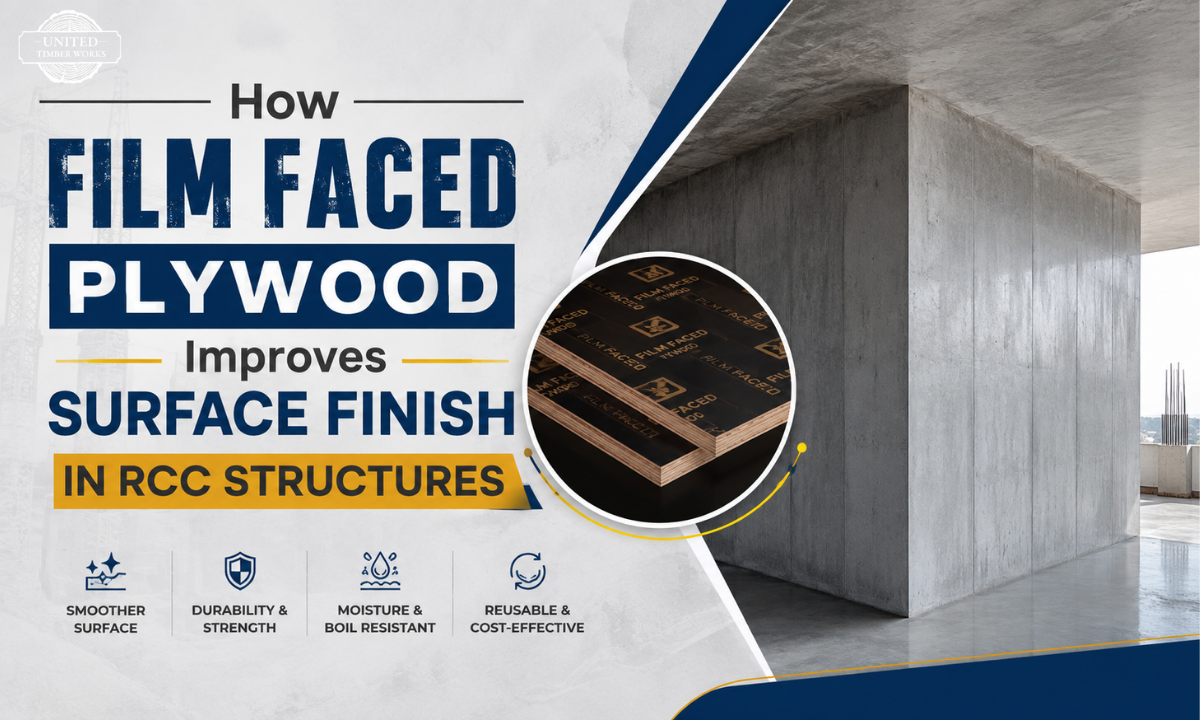
Regular plywood was never designed to handle the pressure, moisture, and repeated reuse that concrete formwork demands. Film faced shuttering ply addresses this by adding a resin-impregnated film layer on both faces of the board. The right manufacturer will make the plywood from selected hardwood veneers, bonded with phenolic resin and pressed for density. This construction gives the panel three qualities that directly influence how the final concrete surface turns out. Here they are:
1. A Smooth, Sealed Working Surface
The film coating creates a sealed, low-friction face that concrete does not stick to easily. When the formwork comes off, the surface strips clean instead of pulling away chunks of cement paste or leaving rough patches behind.
2. Resistance to Water Absorption
Concrete is wet by nature, and shuttering panels sit in direct contact with that moisture for hours during curing. Ordinary plywood absorbs this moisture, swells, and warps. A high-density waterproof shuttering film faced plywood resists that absorption, which keeps the panel flat and dimensionally stable through the pour.
3. Structural Density That Withstands Pressure
Fresh concrete exerts real lateral pressure on formwork, especially in columns, walls, and deep beams. A dense, well-bonded plywood sheet resists bending or bulging under that load. When the panel does not flex, the concrete face it produces stays flat and even.
How This Translates Into a Better RCC Finish
When a shuttering panel strips clean, stays flat under pressure, and resists moisture damage, the impact on the finished RCC surface is direct. These are the benefits you will notice:
- Fewer honeycombs and air pockets, since the sealed surface does not trap concrete unevenly
- Reduced surface blemishes, because there is no rough grain transferring onto the cast face
- More consistent panel-to-panel finish across large pours, which matters on bigger structures where uniformity is judged visually
- Less dependency on plastering and surface correction after de-shuttering
For site teams working against tight schedules, this reduction in rework is not a minor benefit. It changes how quickly a project can move from one pour to the next.
Reusability Changes the Economics of a Project
A shuttering panel is rarely used just once. On most sites, the same set of panels goes through multiple cycles across different pours. This is where the quality of the film coating and the density of the core becomes a financial factor, not just a technical one.
Panels that degrade after two or three uses need frequent replacement, and every replacement adds cost and disrupts the work schedule. A well-manufactured shuttering film faced plywood panel is built to go back up again on the next pour, holding its surface quality across repeated cycles instead of showing wear after the first few uses.
Where United Timber Works Fits Into This
This is exactly the gap the company has worked to close for construction teams across India. Our manufacturing runs out of an 8.5-acre integrated facility, and our shuttering plywood conforms to IS:4990 standards, built from premium Eucalyptus hardwood for strength and precision.
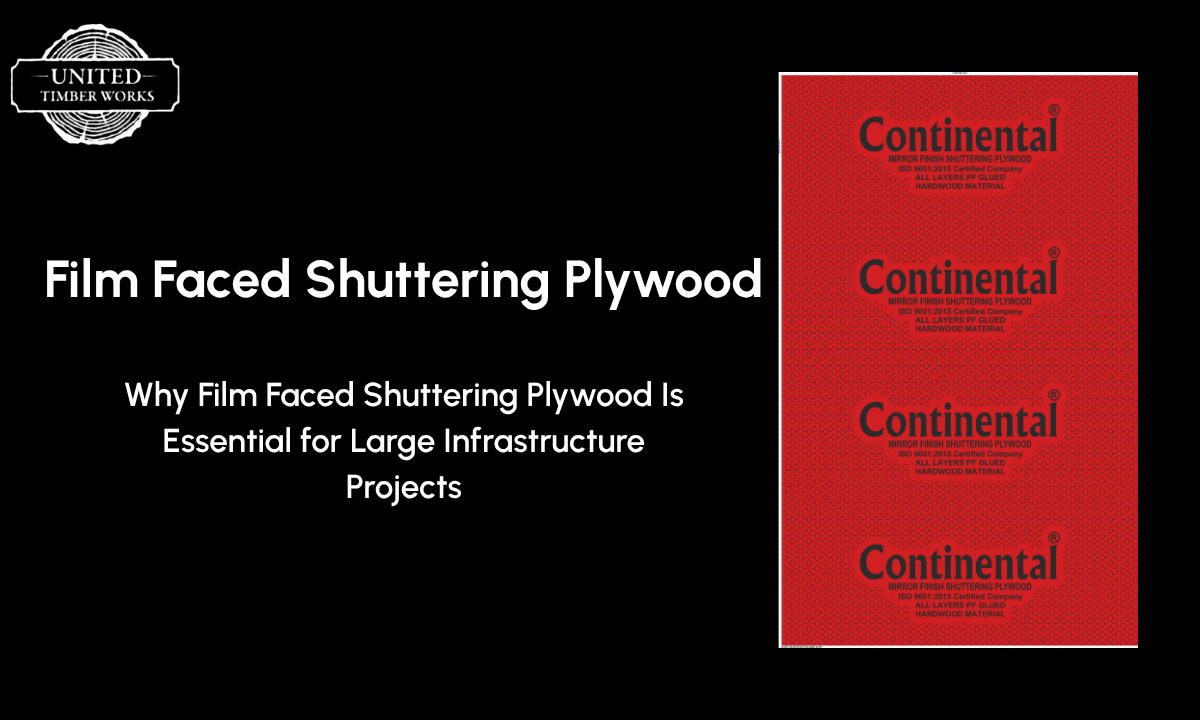
We currently offer five distinct film faced shuttering plywood options: UTW, Majestic, Express, Continental, and Everline. Each one is built around the same mirror finish philosophy, but the right choice for your site depends on factors specific to your project, such as the scale of the pour, the number of reuse cycles you are planning for, and the finish standard your client expects. Our team can walk you through which option fits your requirements rather than leaving you to guess.
Our track record backs this approach. We have delivered close to 14.47 crore square feet of shuttering plywood to more than 87 contractors and 169 dealers across India in the last five years, supported by a dealer network spread across 14 states, 46 cities, and 60 pincodes.
Get in Touch Before Your Next Site Order
Surface finish in RCC structures is not decided at the plastering stage, it is decided the moment concrete touches the formwork. Choosing shuttering film faced plywood that strips clean, resists moisture, and holds its shape under pressure saves both time and money across the life of a project.
If your site is looking for a shuttering partner that understands this, United Timber Works is ready to help. With over four decades of manufacturing experience, ISI-certified quality, and a dealer network built for reliable supply across India, we bring more than plywood to your project, we bring the consistency your RCC work needs. Reach out to our team today to find the right film faced shuttering plywood option for your next pour.